Essential knowledge and tools in high-performance team sports
CONTACT US
Within high-performance team sports, athletes are supported by multidisciplinary teams focused on wellbeing, injury prevention, and performance optimization. This support is essential, since knowledge and practices in high performance are constantly evolving. To keep improving, coaches and athletes should strive to have a multidisciplinary team that reviews the entire scope of high performance. While this team and their support are essential, there is a risk that athletes become overly reliant on experts. Dependence on guidance may limit the development of autonomy, personal leadership, and long-term growth. To compete at the highest level, athletes need a strong understanding of essential performance tools, including sleep and biorhythm optimization, injury prevention strategies, pain management, and nutrition. However, knowledge alone is not enough. Athletes also need to learn how to integrate these tools effectively into their daily lives and routines. Learning to apply those tools forms the foundation of an athlete’s training and lifestyle approach to achieve sustained performance.
Biorhythm and sleep
Elite sport environments still underestimate the true impact of sleep on performance and injury prevention. Sleep is not simply ‘rest’. It is one of the primary biological processes through which adaptation, regeneration, and cognitive functioning take place. A sufficient quality and quantity of sleep can improve concentration, increase recovery, and decrease the risk of injury (Nobari et al., 2023).
In high-performance sport, chronic sleep disruption can silently undermine performance long before it becomes visible during competition. An athlete may appear physically prepared yet operate below optimal capacity. Over time, this accumulated fatigue reduces resilience to training stress and increases susceptibility to injury. When this foundational need is neglected, the consequences for performance can be substantial. Research by Nobari et al. (2023) demonstrated significant reductions in endurance performance after only three nights of restricted sleep (7 hours versus 8 hours per night). In addition, athletes sleeping less than 8 hours per night showed a 65% greater risk of injury. These findings reinforce an important reality within elite sport: sleep directly determines an athlete’s ability to adapt to training, sustain performance, and remain available for competition throughout the season.

To optimize both sleep quality and quantity, the following basic guidelines for sleep hygiene are advised for athletes:
- Maintaining consistent sleep and waking times (>9H for athletes) supports a stable circadian rhythm and recovery process.
- Reduce exposure to blue light and stop drinking caffeine in the hours leading up to sleep to facilitate the transition from an active to a restorative physiological state.
- Create a cool, dark, and well-ventilated sleep environment that promotes uninterrupted deep sleep.
Injury prevention:
In elite sport, injury prevention remains one of the greatest challenges for performance and medical staff. Effective injury prevention is not dependent on prescribing corrective exercise, a screening tool, or a recovery intervention. Athletes themselves build it through consistent daily behaviors and training habits.
Important foundations include effective self-regulated individual warm-up structures, monitoring individual training load, structured strength and mobility routines, addressing physical weaknesses systematically, and utilizing tapering strategies to optimize recovery and performance (Eckard et al., 2018; Okobi et al., 2022)
Within high-performance environments, resilience against injury should be an ongoing process rather than a temporary guided intervention by a professional. Athletes who consistently are open about physical complaints and invest in their recovery, preparation, and self-awareness increase their availability and thereby sustain high-level performance over time. In that sense, injury prevention is not simply protection against absence from sport but a competitive advantage.
Pain behavior:
Every athlete knows the sensation of pain. Whether they have faced an affecting injury in the past or have experienced severe pain after rigorous exercise, each athlete is familiar with the pain intense exercise can induce. However, not all pain is damaging, and not all muscle soreness is safe. For an athlete, it is detrimental to know when experiencing pain signals that are temporary and will fade after rest or experiencing pain that could lead to injury. The first step is to learn how to recognize and acknowledge the pain. The next step is to be open about it to the medical and performance staff. Together the staff and athlete can make a joint decision on what to do next. The last step is reflection if the correct call was made. This approach will teach athletes when to push forward and when to hold back, preventing injury. Therefore, reflection and knowledge about pain and pain behavior are essential tools in high-performance sports (Hainline et al., 2017).
Nutrition:
Often overlooked or deemed less important than training and recovery is knowledge about nutrition. Poor nutritional behavior can influence performance substantially. Macronutrients and micronutrients are both essential in high performance (Amawi et al., 2024):
- Proteins are essential for muscle generation and muscle recovery.
- Fats contribute to hormonal balances and long-term energy utilization.
- Carbohydrates are the driver of high performance, allowing for explosive, high-intensity movement.
- Vitamins and minerals allow an athlete to retain immune function, recover, and increase overall health.
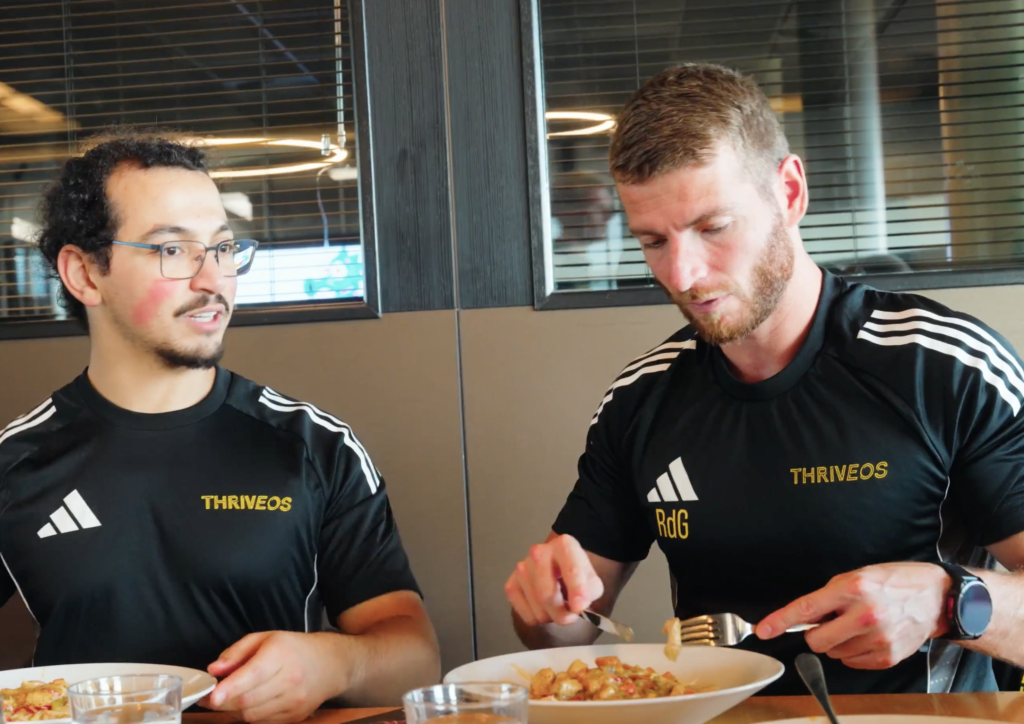
Nutrition outside the club is a crucial aspect of education that is often overlooked. Most clubs invest a lot in nutrition at the club but neglect that the athletes are spending more time in their private lives and need education to make the right choices. When educated, the athletes are more likely to eat and drink in a way that optimizes their performance. The goal is that athletes learn what they need to perform at peak conditions and to recover afterwards. If athletes do not properly incorporate balanced and varied nutrition into their program, it will lead to a reduction in performance (Amawi et al., 2024). Allowing the body to retain overall health, providing building blocks for repair and supplying substrates for high-intensity performance, creates the difference in development and performance.
Practical implications:
- Knowledge and tools about biorhythm and sleep, injury prevention, pain behavior, and nutrition are essential to enhance performance and prevent injury for athletes.
- Education is important to create self-regulating, independent, adaptive athletes that can integrate the knowledge and tools in their lives without constant supervision of professionals.
- Educating athletes will help professionals in multidisciplinary teams to influence athletes when they are not at the club.
References :
Amawi, A., AlKasasbeh, W., Jaradat, M., Almasri, A., Alobaidi, S., Hammad, A. A., Bishtawi, T., Fataftah, B., Turk, N., Saoud, H. A., Jarrar, A., & Ghazzawi, H. (2024). Athletes’ nutritional demands: a narrative review of nutritional requirements. Frontiers in Nutrition, 10, 1331854. https://doi.org/10.3389/fnut.2023.1331854
Eckard, T. G., Padua, D. A., Hearn, D. W., Pexa, B. S., & Frank, B. S. (2018). The Relationship Between Training Load and Injury in Athletes: A Systematic Review. Sports Medicine, 48(8), 1929–1961. https://doi.org/10.1007/s40279-018-0951-z
Hainline, B., Derman, W., Vernec, A., Budgett, R., Deie, M., Dvořák, J., Harle, C., Herring, S. A., McNamee, M., Meeuwisse, W., Moseley, G. L., Omololu, B., Orchard, J., Pipe, A., Pluim, B. M., Ræder, J., Siebert, C., Stewart, M., Stuart, M., Engebretsen, L. (2017). International Olympic Committee consensus statement on pain management in elite athletes. British Journal Of Sports Medicine, 51(17), 1245–1258. https://doi.org/10.1136/bjsports-2017-097884
Nobari, H., Banihashemi, M., Saedmocheshi, S., Prieto-González, P., & Oliveira, R. (2023). Overview of the impact of sleep monitoring on optimal performance, immune system function, and injury risk reduction in athletes: A narrative review. Science Progress, 106(4). https://doi.org/10.1177/00368504231206265
Okobi, O. E., Evbayekha, E. O., Ilechie, E., Iroro, J., Nwafor, J. N., Gandu, Z., & Shittu, H. O. (2022). A Meta-Analysis of Randomized Controlled Trials on the Effectiveness of Exercise Intervention in Preventing Sports Injuries. Cureus, 14(6), e26123. https://doi.org/10.7759/cureus.26123

Result is no coincidence.
It is measurable.